Tribal Business Structure Handbook

I recently found this nice writeup of business structures as they relate to Tribal Governments, I wish I found this sooner to help with some of my board work.  Nice reference for those trying to understand various legal and tax structures.  Click on the image below to get to the PDF.

– Dom

Tribal Business Structure Handbook

Err Card 2 fixed on Marantz PMD661 with A2.03 Firmware

I’ve owned a Marantz PMD661 for a while now and I was quite bummed to find I could not use any of my SanDisk 8GB SDHC Class 4 cards at the time (about a year ago).

I tried many things at the time, I formatted the SDHC Card in the Marantz PMD661, which worked, but when I went to record audio, I would get a “Err Card 2” message when I tried to record (or it would error on booting the recorder).

The only solution, buy more 2GB SD Cards to use.  Lately I have seen less and less of them in the stores, so I also recently did a last time buy of about 5 of them figuring that many would allow me to use my recorder for years to come (yes, these flash storage devices do wear out).

Well, it looks like Marantz/D&M Professional finally fixed the SDHC issue for most of the cards out there.  On 6/17/2011 they released a new firmware version (A2.03), the last update I had seen on the website was A1.17.  The firmware update was mostly to address the use of larger capacity SDHC cards.

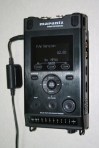
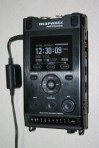
I installed the new firmware per their instructions (used a 2GB card) and now I can successfully record audio using the SanDisk 8GB SDHC Class 4 cards I’ve had for a while now.  With the 2GB cards, I could record a little over 3 hours of 2 channel audio (cd quality – PCM-16bit, Stereo, 44.1 khz), with the new 8GB cards I can now record over 12.5 hours of audio as seen on this picture to the right (not sure I’ll ever need that much recording time).

Thanks Marantz/D&M Pro for the update!

– Dom

Sandia Vista Elementary School Montessori Program – a hidden gem in the Rio Rancho Public School System (RRPS)

We are about to complete our first full school year in the Rio Rancho Public School (RRPS) Montessori Program and we could not be happier with the progress our kids are making in school.

To tell you the truth, we actually stumbled across this hidden gem when looking to buy a house after moving to Albuquerque, NM from Tucson, AZ.  We looked at many houses in the northeast part of Albuquerque and contemplated Corrales.  We eventually found a house we were interested in not far from the intersection of highway 528 and Idalia Road.  In addition to checking out the house, we checked out where the elementary school was.  This led us to the Sandia Vista Elementary School website.  The website has since changed, but back then, the RRPS Montessori program was highlighted right on the school website.  Since we previously had our boys in a Montessori school in Tucson (Casa Ninos School of Montessori) we really wanted to continue the education method of Maria Montessori for as long as possible.

Our oldest (soon to be 6) is in Kindergarten and the cost of his Montessori school is covered by the state.  Our other son (4 years now) is in the pre-kindergarten (or preschool, or affectionately called “tomato garden” in the family) program which costs us $600 a month (this is not nursery school, our youngest had to use the toilet for acceptance in the program).  We had the choice to place both our boys in the same classroom, but they spend enough time together outside school that we thought it best to split them up and let them make as many friends as possible.

What amazes me most is how involved the parents are and the effort they put into their kids for this Montessori program.  A percentage of kids that go to school with my boys come in from outside the Sandia Vista school boundary, this means those parents have to drive their kids to and from school.  One benefit … It was quite nice to be invited to a piano recital recently since a classmate was taking piano lessons.

Being Native American and a Laguna Pueblo member, I thought it was awesome that the RRPS is open and committed to diversity, here is an example.  One of the students in the Kindergarten Montessori was from Santa Ana Pueblo and the parent, school, & teacher arranged a field trip to visit the pueblo on its feast day.  A bus full of students & parents got the chance to experience something only Indians get to know and love.  The students & parents watched some social dances in the plaza, had the chance to catch giveaway items from the rooftops in the pueblo, and have a nice hot lunch of green or red chile & various dishes at a relative of the student’s house before heading back to school.

This program is successful because of the commitment of RRPS & the teachers (Ms. Gchachu, Ms. Lance, & other teachers).  Both classroom teachers (and aides Ms. Susan & Ms. Nevin) are Montessori trained and work throughout the year with other Montessori schools in the Albuquerque area to share best practices and keep current.  This is the first we have heard of a public school system doing a Montessori  program.

The RRPS Montessori program is only pre-K to grade 2 for now, but they have a vision for the Montessori program to evolve to grade 5.  Our kids are only in the beginning here, and it is our hope RRPS attracts the attention and mindshare of more parents to grow this new choice in New Mexico child education.  We will certainly do our best to support & encourage it’s growth.

Here is a link if you are interested in more information about the RRPS Montessori program or call (505) 994-2811 extension 531.

Also here is a little history I recently found, sounds like we moved back home to NM at the right time … Click on the Cached Abq Journal links.

– Dom

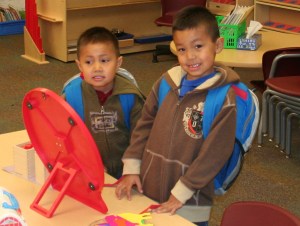
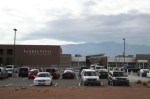
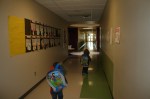
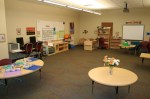
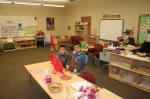
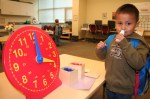
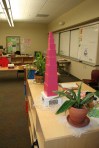
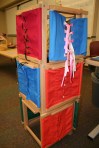
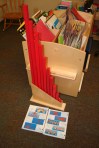
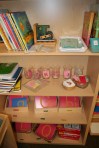
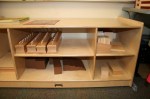
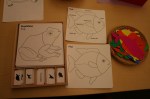
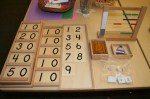
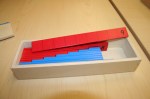
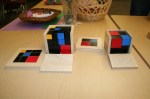
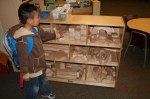
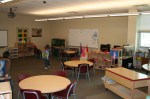
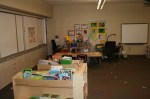
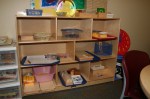
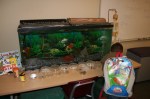
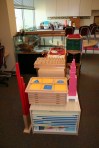
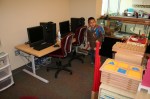
P.S. … Here are some pictures of the school & classrooms where both of my sons go, pretty neat place and they even integrate computers.  Enjoy!

AISES NAISEF 2011 – Power Up Science

Since I moved to New Mexico to be closer to family, I’ve been asked to help out with several things locally … some involved family, some involved tribal committees, now some involved my employer IBM.

IBM donated some money to the American Indian Science & Engineering Society (AISES) for the National American Indian Science and Engineering Fair & Expo (NAISEF). This science fair, from what I know, is held in Albuquerque, New Mexico nearly every year about the same time. This year it was on March 24-26, 2011 at the Albuquerque Convention Center. Since the company liaison could not attend (and I was not on company travel teaching somewhere), I was asked to step in and help out as a judge and to hand out the awards.
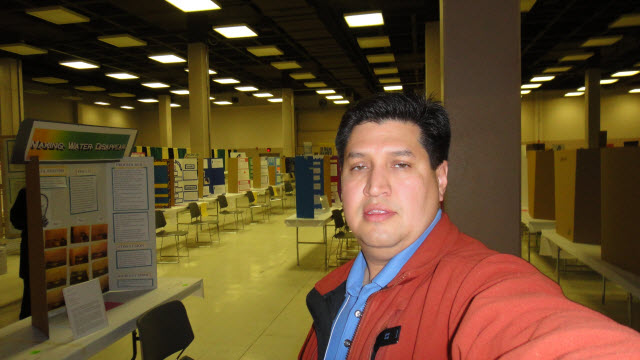
I learned part of the donation money was to be used for special awards at the fair, in fact there were 9 special IBM Innovation Awards. The award criteria was for a student or students whose science experiment is innovative and inventive. Each of the awards were $250, except the team award, it was $1000.

Little did I know how much work this would be … I spent most of the day looking at ALL the science fair projects (about 225 of them) focusing on the Math, Engineering, Chemistry, Computer Science, and Team categories (there was no “team” grouping so I had to find all of them). Oh, did I mention that there were Male and Female awards in each category except the team award? Lots of walking and talking to the kids, it was a fun day.
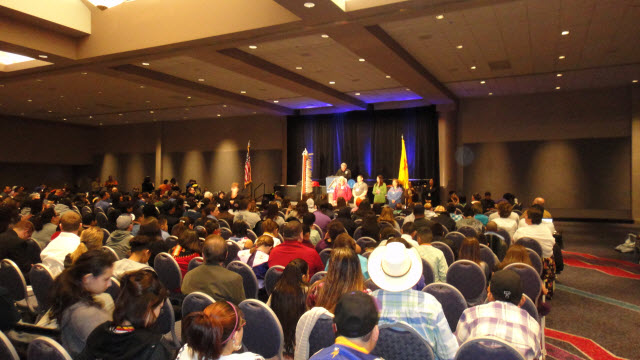
Since the awards ceremony is such a long event the next morning (about 3 hours long with awards in each category and age group), I tried to keep the 9 IBM awards as brief as possible, I let folks know who I was and a bit about my journey.  I really wanted to elaborate more on what made each one of the projects innovative from my perspective, but I was already running long … at least with this blog post I can do that here. 🙂

So here we go …

* The Chemistry Female award went to Paige Leingnag & Tawnie Landreaux for their experiment on “Effervescent Action”, this project showed a construction and setup of the experiment apparatus to precisely measure experiments in a contained and controlled way, they iterated until the setup was easily repeatable.

* The Chemistry Male award went to Wilfred Jumbo for the experiment on “The Effect of Natural Bark”, this native dye project showed continued process improvement in material collection and processing over the life of the experiment using different tools.

* The Math Female award went to Mikayla Baker for the experiment on “Trick Yah Dice”, this project showed how variations in data collection could reduce process time.

* The Math Male award went to Izaiah Lopez for the experiment on “Counting vs Skill”, this project like the other math one showed how variations in data collection could reduce time.

* The Engineering Female award went to Raquel Redshirt for the experiment “Improving the Heat Capacity of Homemade Solar Ovens”, this project showed various facets of invention and process improvement, the student also made several solar ovens and sold them.
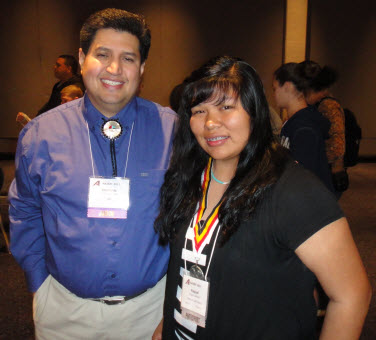
* The Engineering Male award went to Emilio Yazzie for the experiment “Simple Electric Heat Conversion”, this project used very basic materials to construct working motors, the materials were rubber bands, paper clips, insulated wire, and batteries. Process improvement to make the experiment more stable were for the next year.

* The Computer Science Female award went to Selena Lopez for the experiment “Keyboard”, this project showed possible process improvements using parallel testing.

* The Computer Science Male award went to Ivan Rajen for the experiment “Computer Model of Time-Varying Heat Conduction in a Plate”, this project showed inventiveness in constructing the computer model simulation in a spreadsheet (excel) and doing real world testing against it using a thermistor on a metal plate and homemade chill environment.
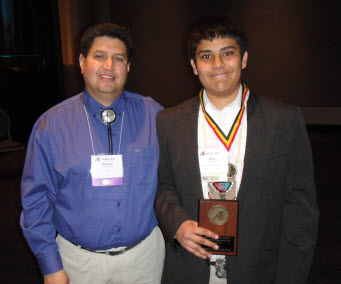
* The Team Award went to Juana Espinosa & Michelle LaGarde for the experiment “Wetland Health Evaluation: Replacing Bottle Traps with Hester Dendy Traps, Year Two”, this project was the most impressive, it showed continued process improvement and inventiveness in the construction of the Hester Dendy traps. These two ladies not only improved on the trap by modifying it to their wetland collection conditions, they also went through variations in construction to make them more durable. The both tried making the traps out of cement board to make them long lasting.

This was a great event, AISES is a great organization focused on our native youth, and I’d like to thank my employer IBM for allowing me to take time out of my work day to judge and award this event.

– Dom

Two Firefox browser additions you should have

I’ve been involved with personal computers for a long time, long enough to know a bit about browser security and good tools when I see them.

For one, I always think it’s better to use a 3rd party browser vs the native browser that comes with the operating system or computer.  I have been a big fan of the Firefox browser since it first came out, a separate application install meant security updates to the browser were not tied to the underlying operating system.  In addition, the open source nature, extensions, and plugin support meant there is a open framework for getting problems fixed quick and adding new features relatively simple.

There are two firefox browser additions I want to make people aware of, I use them to minimize the number of ads I see on most websites (sometimes ads lead to some unsafe sites) and the other forces a secure connection to most websites to help prevent network eavesdropping.

  • Ad Block Plus – this addition tells firefox not to load ads from common websites that serve advertisements, it reduces the content on the page.
  • HTTPS Everywhere – this addition from the Electronic Frontier Foundation tells firefox to use a secure connection when logging on to a website if it exists, it helps keep your id and password more secure.

I’m sure there are other security related additions, these are just two I found most useful.

Hope this helps keep your browsing safe!

– Dom